
Table of Contents
- The Look Stone Brings to a Home
- Popular Places to Add Stone Inside and Outside Your Home
- Foam Panels and Stone Veneer: Two Ways to Get the Look
- What’s Inside Each One
- DIY or Pro: How Each One Gets Installed
- Fire Safety Around Fireplaces
- The Price Difference
- What the Warranty Covers
- Made in America and Stocked Near You
- How Realistic Each One Looks
- Choosing the Right Stone for Your Home
- Frequently Asked Questions (FAQ)
- Stone Panel vs. Manufactured Stone Veneer Downloadable
The Look Stone Brings to a Home
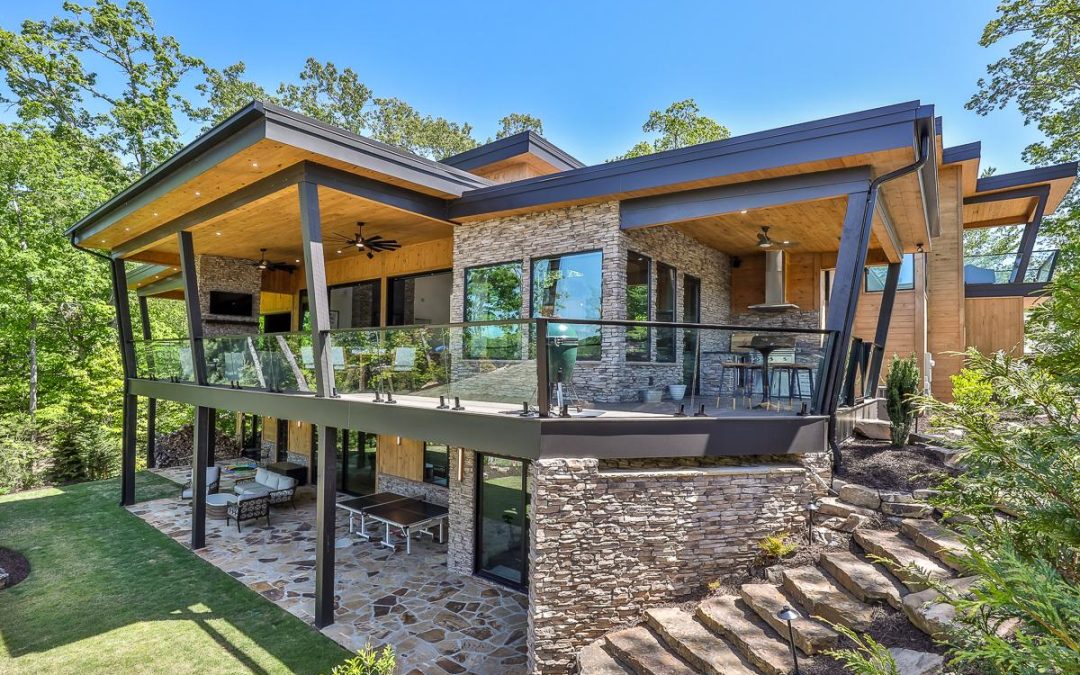
Stone changes a space’s whole personality. Rough, chunky fieldstone gives a house the warmth of a mountain lodge or an old farmhouse, and tightly stacked ledgestone reads clean and modern next to black window frames and simple lines. Somewhere in between, a craftsman cottage-style blend of rounded stones in soft browns and grays gives a traditional home that storybook feel. Whatever your style, stone brings texture and a sense of permanence that paint, wood, and drywall can’t match.
Popular Places to Add Stone Inside and Outside Your Home
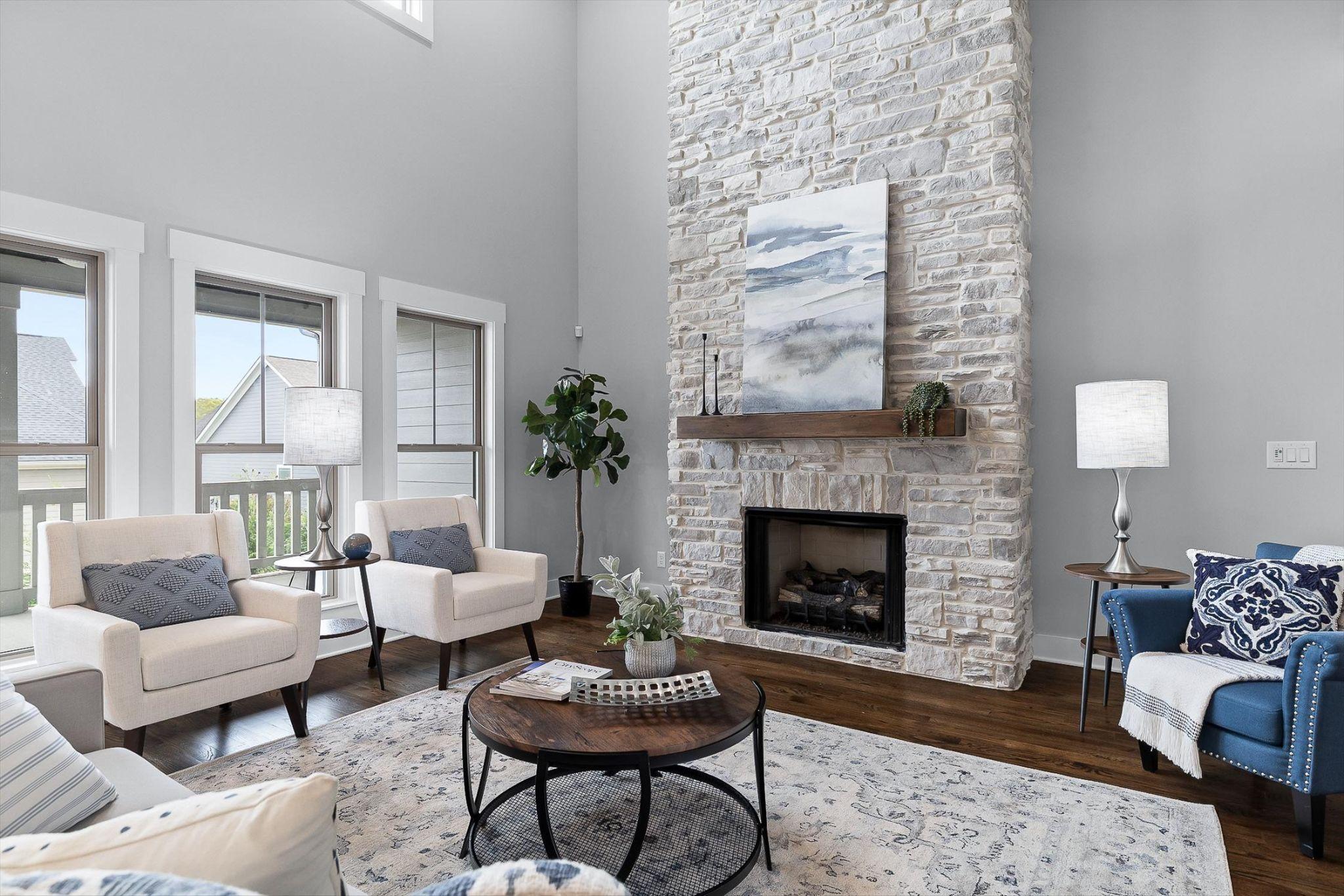
Most people picture stone on the front of a house, wrapping the porch columns, running along the foundation, or framing the entryway. It works just as well indoors, where popular applications include floor-to-ceiling fireplaces, accent walls behind the TV, and stone-clad kitchen islands. Outdoor kitchens and grill areas land somewhere in the middle and are one of the easiest ways to carry the look from the house into the backyard.
Foam Panels and Stone Veneer: Two Ways to Get the Look
Once you know you want stone, shopping for it gets confusing fast. Search online, and you’ll find two very different products sold under the same names like faux stone, veneer, and stone siding. One is a large foam panel you fasten to the wall yourself, and the other is manufactured stone veneer, a cement-based product set in mortar by a trained installer. From across the street, both can pass for stone, but up close and 20 years down the road, the differences add up in what they’re made of, how they hold up, and what’s backing them.
What’s Inside Each One
Foam stone panels are made from polyurethane, a dense plastic foam pressed into stone-shaped molds and painted to match. Some brands add UV inhibitors and fire retardants, but they contain no stone or mineral, so they won’t have the weight, cool touch, or gritty surface of masonry. Manufactured stone veneer starts with real quarried stone. We make our molds from natural stone samples, fill them with a blend of Portland cement, aggregates, and iron oxide pigment, and hand-color every piece with the same iron oxide found in natural stone. Our products are cast to meet ASTM C1670, the industry standard for manufactured stone veneer, so what goes on your wall has the heft and texture of stone and the testing to back it up.
DIY or Pro: How Each One Gets Installed
Foam panels sell themselves on ease. They weigh about a pound per square foot, cut with woodworking tools, and go up with screws and adhesive. That convenience has limits: the color sits on the foam’s surface and can scratch or chip, and a panel held on with screws and glue is only as secure as its fasteners. Stone veneer weighs closer to 8 to 12 pounds per square foot and is set in mortar by a trained installer, who also handles the moisture barrier and prep work behind it. It takes more time, but each stone bonds into the wall as a permanent part of your home.
Fire Safety Around Fireplaces
A stone fireplace is one of the most popular ways to bring stone indoors, and it’s where the gap between these two products matters most. Polyurethane is combustible. Foam panel manufacturers say their standard panels burn much like wood, and they tell homeowners to follow the fireplace or stove manufacturer’s clearances for combustible materials and keep panels entirely away from the firebox. Some brands sell fire-rated panels, often as an upgrade, and even those are described as fire-resistant rather than fireproof. Manufactured stone veneer is made of cement and stone aggregate, the kind of material that belongs around a hearth.
The Price Difference
Foam panels usually cost less up front, mostly because you can install them yourself. The materials themselves can cost about the same. HomeAdvisor’s stone veneer siding cost guide puts faux stone at $6 to $9 per square foot and manufactured stone at $5 to $8 for materials alone, and Angi reports that stone veneer installers typically charge $2 to $4 per square foot. That labor buys you a professional installation, a wall with no panel seams to hide, and a product backed by a 50-year warranty, which makes stone veneer the better value over the life of your home.
What the Warranty Covers
Foam panel warranties vary widely by brand. Some imported panels come with as little as two years of coverage, other brands offer 10- or 20-year limited warranties, and at least one brand’s warranty specifically excludes sun fading. We back our manufactured stone with a 50-year limited warranty against manufacturing defects, starting from the installation date. The warranty applies to the original purchaser, excludes damage from improper installation, natural disasters, and normal weathering, and activates when you mail in the warranty certificate within 30 days of installation.
Made in America and Stocked Near You
Many foam stone panels sold online are manufactured overseas and shipped by sea, which can mean long lead times when you order, and a longer wait if you come up a few panels short. We have made our stone veneer in Chattanooga, Tennessee, since 2003, using locally sourced materials in our 160,000-square-foot facility, and we sell it through more than 150 dealers nationwide, so you can see samples at a local showroom and get extra stone quickly when you need it.
How Realistic Each One Looks
Foam panels come in large sheets, often 2 by 4 feet or bigger, which lets you cover a wall quickly, though the same pattern can repeat and the seams between panels need to be hidden. Manufactured stone veneer goes up piece by piece, so an installer can mix sizes, shapes, and colors the way a natural stone wall comes together, and that detail takes longer to build.
Choosing the Right Stone for Your Home
Whether you’re finishing a fireplace, updating your home’s exterior, or building an accent wall, manufactured stone veneer gives you a stone look that lasts for decades. Made from cement and stone aggregate, backed by a 50-year warranty, and set piece by piece with natural variation that foam panels can’t match. If stone veneer sounds like the right fit for your project, explore our full collection, find ideas and design inspiration on our Pinterest, and use our store locator to connect with a dealer near you.
Ready to see stone veneer in person?
Find a Horizon Stone dealer near you and see the samples for yourself.
Frequently Asked Questions (FAQ)
▸ What’s the difference between foam stone panels and manufactured stone veneer?
Foam panels are polyurethane sheets molded to look like stone and fastened to the wall. Manufactured stone veneer is a cement-based product cast from real stone and set in mortar by a trained installer.
▸ What are foam stone panels made of?
Polyurethane foam, molded and painted to look like stone. Some brands add UV inhibitors and fire retardants, and they contain no stone or mineral.
▸ What is manufactured stone veneer made of?
A blend of Portland cement, aggregates, and iron oxide pigment poured into molds taken from real quarried stone. At Horizon Stone, we hand-color each piece and cast our products to meet ASTM C1670.
▸ Are foam stone panels safe to use around a fireplace?
Standard polyurethane panels are combustible, so manufacturers require you to follow your fireplace or stove’s clearances for combustible materials and keep panels away from the firebox. Stone veneer is made of cement and stone aggregate.
▸ Can I install foam stone panels myself?
Yes. At about a pound per square foot, they can be cut with woodworking tools and installed with screws and adhesive, though the painted surface can scratch or chip over time.
▸ How is stone veneer installed?
It weighs about 8 to 12 pounds per square foot, and a trained installer sets it in mortar over a moisture barrier so each stone bonds into the wall.
▸ Is manufactured stone veneer more expensive than foam panels?
Stone veneer usually costs more up front because it requires a professional installer, who typically charges $2 to $4 per square foot, according to Angi. The materials are similarly priced, with HomeAdvisor listing faux stone at $6 to $9 per square foot and manufactured stone at $5 to $8. Stone veneer also comes with a 50-year warranty.
▸ What warranty comes with Horizon Stone veneer?
A 50-year limited warranty against manufacturing defects, starting from the installation date. Foam panel warranties vary widely by brand, with some offering as little as two years.
▸ Where is Horizon Stone made?
In Chattanooga, Tennessee, where we’ve made our stone veneer since 2003. It’s available through more than 150 dealers nationwide.
▸ Which one looks more natural?
Manufactured stone veneer goes up piece by piece, so sizes, shapes, and colors vary like a natural stone wall. Foam panels cover more area faster but show repeating patterns and seams.
▸ Can stone be used inside the home?
Yes. Popular interior applications include floor-to-ceiling fireplaces, accent walls, and kitchen islands.
Stone Panel vs. Manufactured Stone Veneer Downloadable
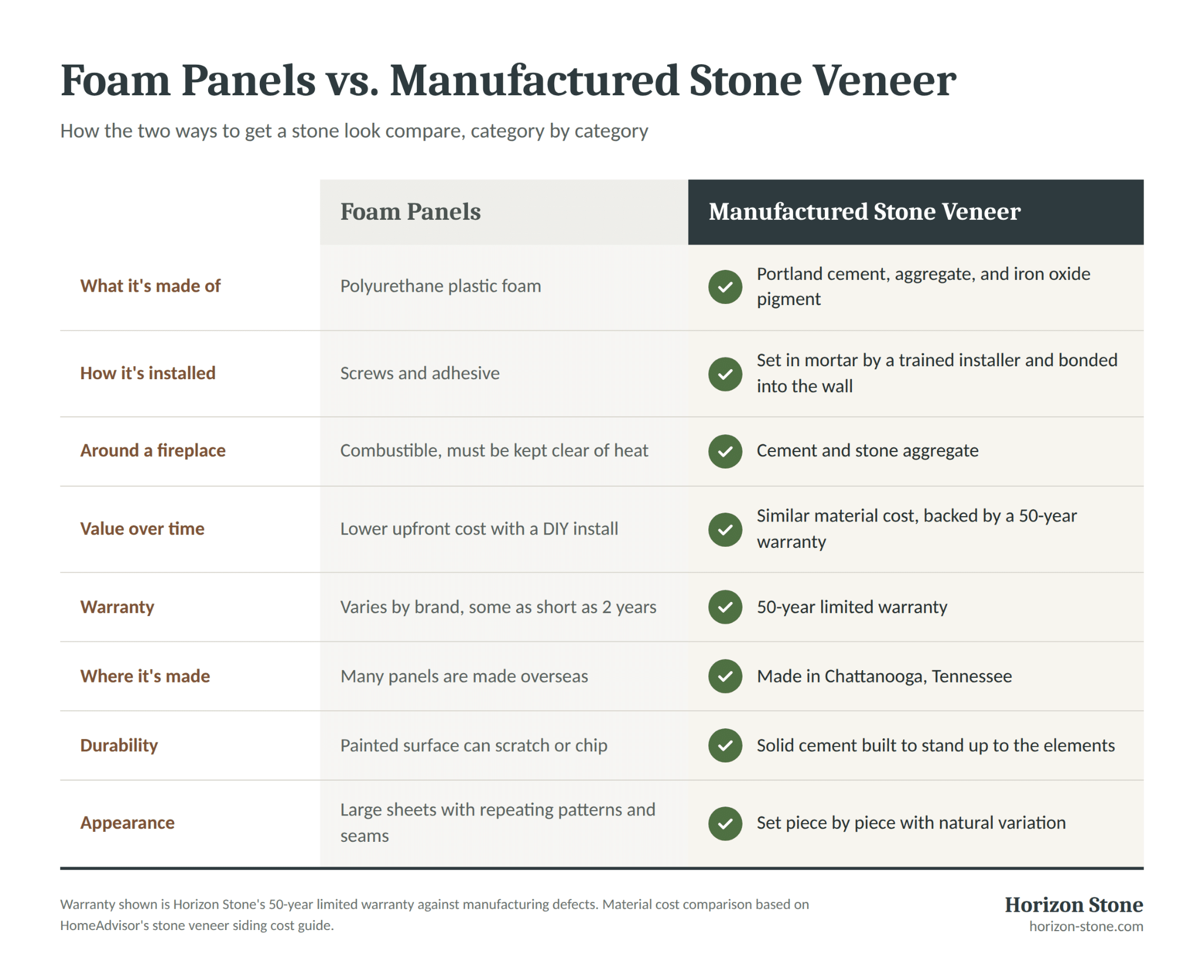
Here is how the two ways to get a stone look compare, category by category.
| Category | Foam Panels | Manufactured Stone Veneer |
|---|---|---|
| What it’s made of | Polyurethane plastic foam | ✓ Portland cement, aggregate, and iron oxide pigment |
| How it’s installed | Screws and adhesive | ✓ Set in mortar by a trained installer and bonded into the wall |
| Around a fireplace | Combustible, must be kept clear of heat | ✓ Cement and stone aggregate |
| Value over time | Lower upfront cost with a DIY install | ✓ Similar material cost, backed by a 50-year warranty |
| Warranty | Varies by brand, some as short as 2 years | ✓ 50-year limited warranty |
| Where it’s made | Many panels are made overseas | ✓ Made in Chattanooga, Tennessee |
| Durability | Painted surface can scratch or chip | ✓ Solid cement built to stand up to the elements |
| Appearance | Large sheets with repeating patterns and seams | ✓ Set piece by piece with natural variation |
Warranty shown is Horizon Stone’s 50-year limited warranty against manufacturing defects. Material cost comparison based on HomeAdvisor’s stone veneer siding cost guide.

PJ Haberstock
President, Horizon Stone
PJ Haberstock leads Horizon Stone with a commitment to high-quality craftsmanship and community-focused business values. Drawing on over 20 years of building products leadership, PJ focuses on integrity and innovation to ensure every client receives a premier experience. He remains dedicated to ‘building stronger communities’ through strategic industry partnerships and a ‘customer-first’ approach to leadership.