
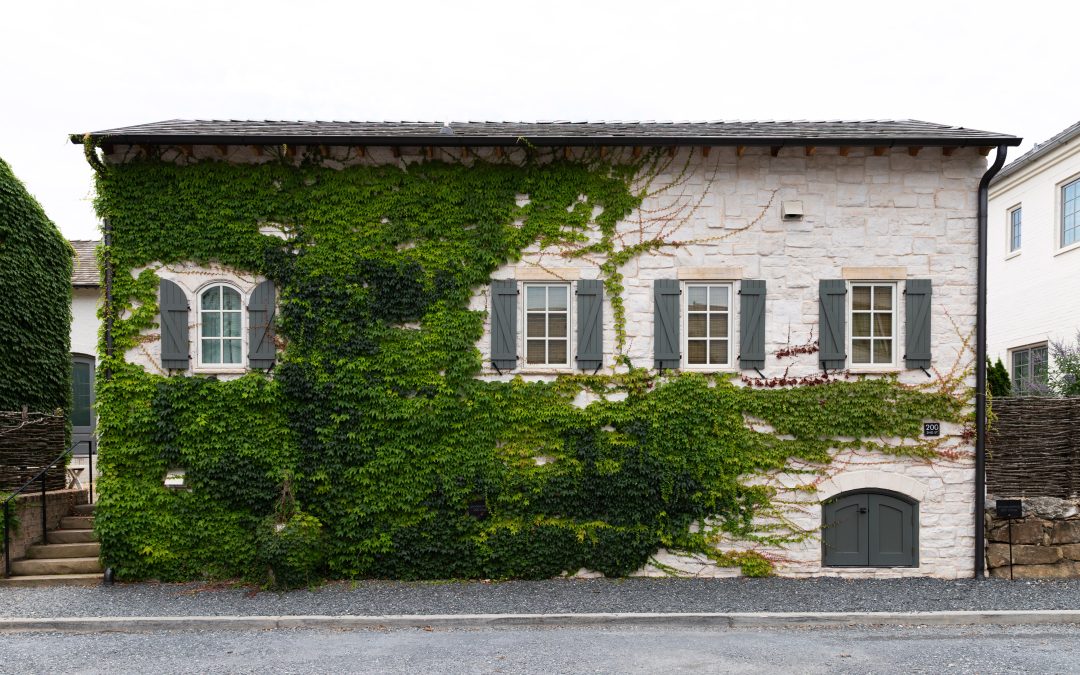
Choosing your stone veneer is an important decision, but the final, defining touch is the application technique. This critical detail—how the mortar joint is handled—is what ultimately shapes the project’s character, determining if the finished space feels modern, traditional, or historic. Understanding the options available is essential for ensuring your design vision translates into a durable, sophisticated, and perfectly styled architectural feature.
Three Ways to Transform Stone Veneer
The true versatility of stone veneer is revealed through the variety of available installation finishes. For most projects, the three core applications are Drystack, Standard Mortar Joint, and Overgrout. Utilizing the same stone with these distinct techniques yields dramatically different visual outcomes across both interior and exterior settings.
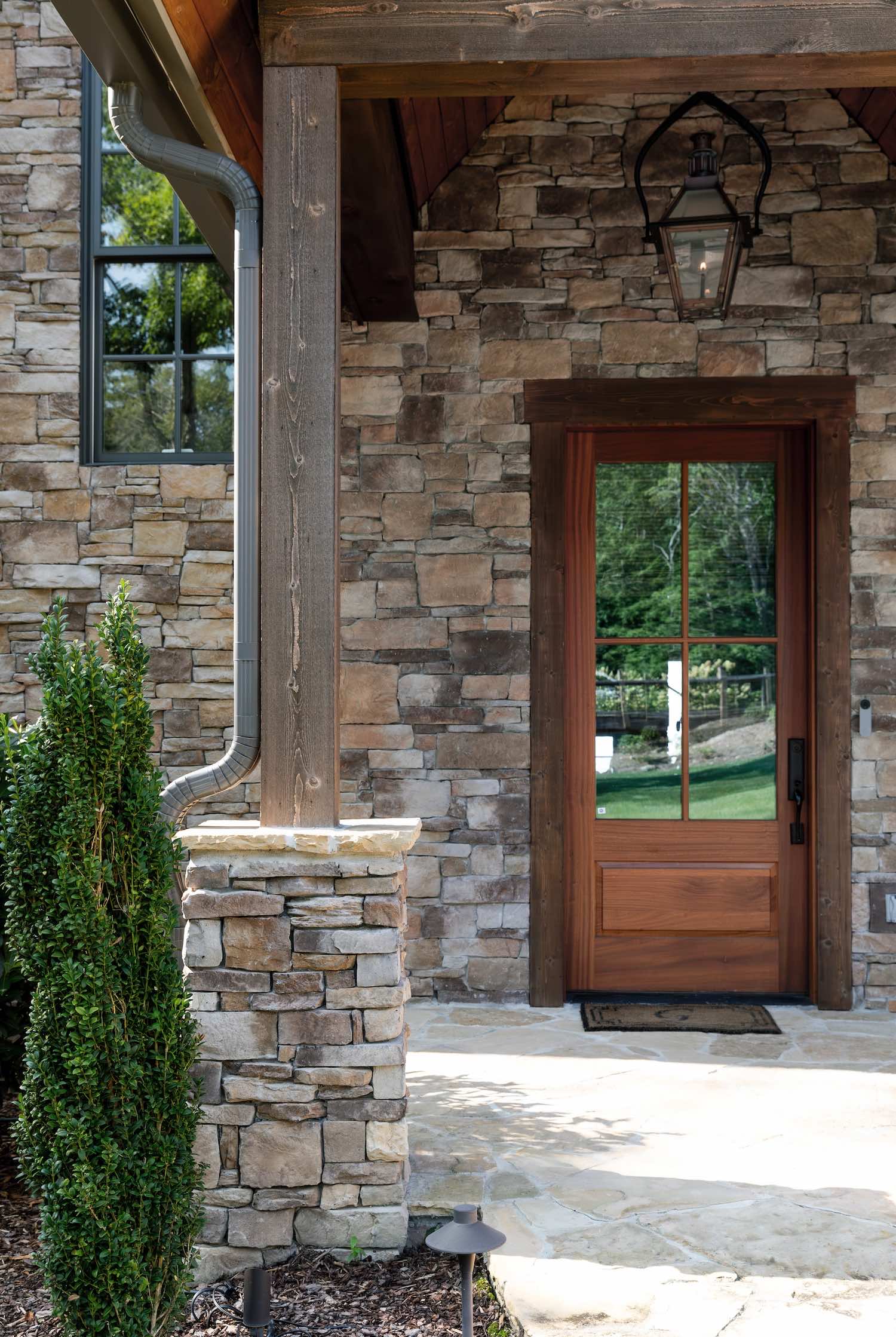
Drystack: The Seamless Look
- What is Drystack? This technique creates a clean, virtually seamless finish. The stone pieces are carefully fitted together with expert precision, leaving almost no visible mortar joint between them.
- When to Choose it? Select Drystack for a modern, minimalist, or crisp aesthetic. This method focuses entirely on the stone’s texture and color, making it the ideal choice for contemporary interior fireplace surrounds and sleek exterior accent panels.
Standard Mortar Joint: The Classic Finish
- What is the Standard Mortar Joint? This is the traditional application, characterized by uniform mortar lines (typically 1/2 inch to 3/4 inch wide) that are slightly recessed. This clear delineation emphasizes the individual shape and outline of each stone piece.
- When to Choose it? This technique is highly effective for traditional, rustic, or versatile designs. It provides a classic, defined look that works perfectly on everything from large exterior facades to conventional interior feature walls or kitchen backsplashes.
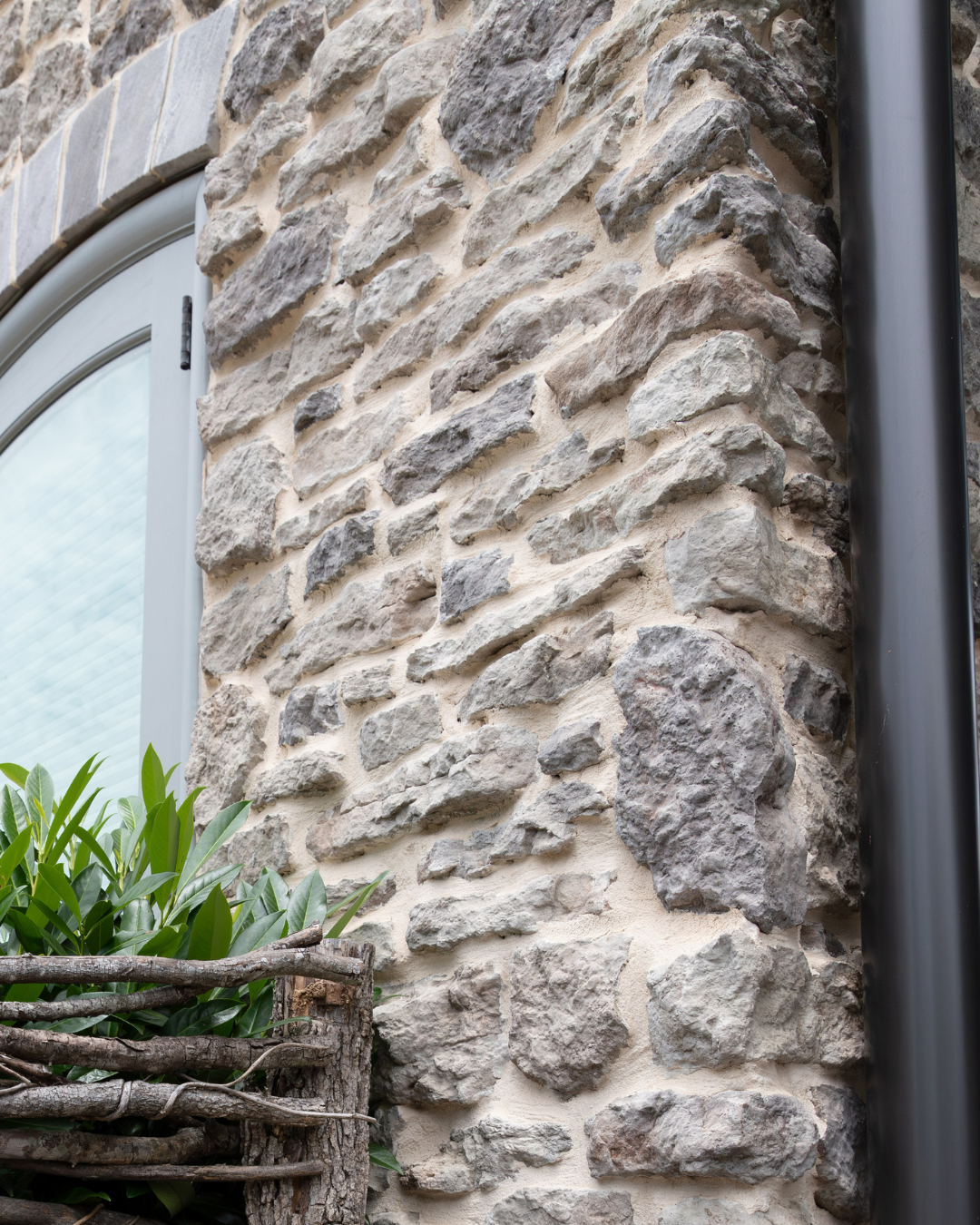
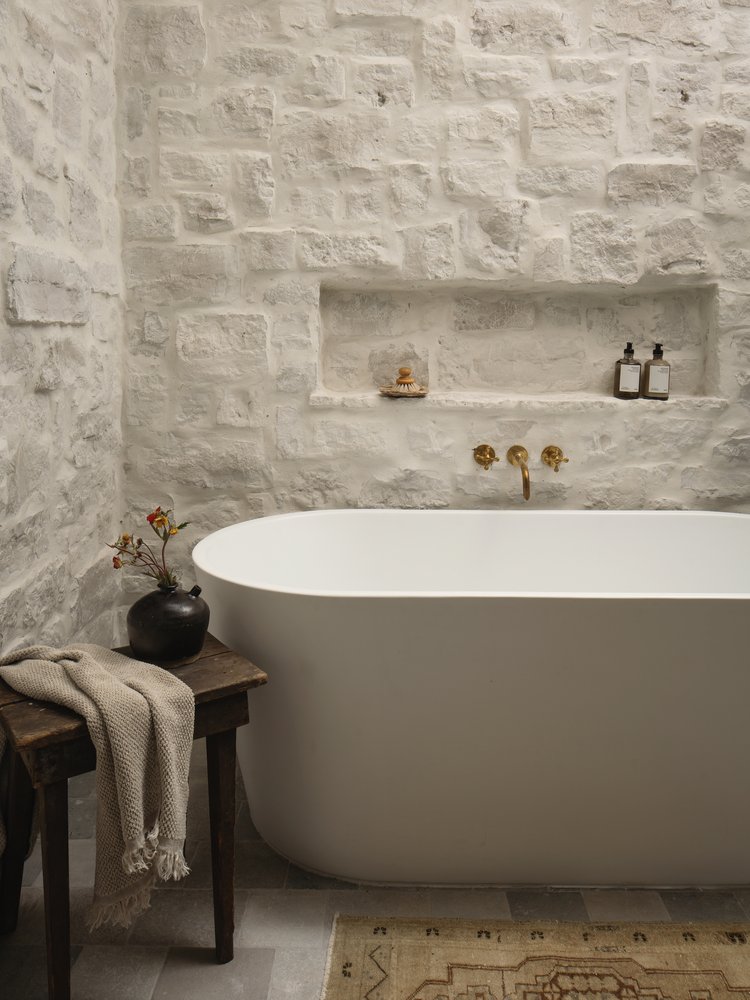
Overgrout: The Historical Feel
- What is Overgrout? In this technique, the mortar is deliberately spread over the face and edges of the stones, filling and often overflowing the joints. The result is a heavy, robust texture that softens the edges of the stone pieces.
- When to Choose it? Choose overgrout for an old-world, rugged, or historical feel. It is excellent for achieving the authentic character of a centuries-old European exterior wall or adding deep, rustic texture to interior wine cellars or large fireplace surrounds.
Beyond Selection for a Perfect Application
The choice between Drystack, Standard Mortar Joint, or Overgrout is a crucial detail that customers often overlook, yet it fundamentally defines the final character of their project. This is where quality installation expertise becomes essential. Our certified installers at Horizon Stone don’t just apply the stone; they offer recommendations tailored to your desired aesthetic and the specific needs of your space. Ready to move beyond the stone selection and guarantee the perfect finish for your project? Contact our experts to schedule a free consultation!
Frequently Asked Questions (FAQ):
1. Can I use any stone veneer profile with any application technique?
While most veneer profiles can technically be installed using any of these three techniques, certain stone shapes are designed to work best with specific applications. For example, a deeply textured, uneven stone is naturally suited for the Overgrout method, while flatter stones excel in the Drystack method.
2. Is one stone veneer application technique better for exterior projects than others?
No single technique is universally “better” for exteriors. The key difference is aesthetic. All three, when installed correctly with proper flashing and weather barriers, provide robust, durable exterior finishes.
3. Which application of stone veneer is the most budget-friendly?
Generally, the Standard Mortar Joint is the quickest and most straightforward, making it the most budget-friendly option for installation labor. Drystack often requires more time for fitting and shaping, making it the most labor-intensive and costly.
4. Does the veneer application technique affect the durability of the stone?
The application technique primarily affects the look, not the stone’s inherent durability. Durability relies more on proper wall preparation, a high-quality mortar mix, and expert installation to ensure structural integrity and effective moisture management behind the veneer.
5. Can I change a Standard Mortar Joint to an Overgrout look later?
Yes, it is possible to transform a standard recessed joint into an overgrout look, although it is a messy and labor-intensive process. This process involves adding a fresh, thick layer of mortar and spreading it over the existing joints and stone faces.
6. What is the main difference between Drystack and a Standard Mortar Joint?
The main difference is the visibility of the mortar. Drystack aims for a seamless appearance with no visible joint, while the Standard Mortar Joint deliberately uses a visible, recessed line to frame and define each stone piece.
7. Should I match my interior technique to my exterior technique?
Not necessarily. While consistency can create flow, your interior spaces (such as a kitchen backsplash) might call for the clean look of Drystack, while your exterior façade might demand the rugged texture of Overgrout. Use the technique that best suits the mood of the individual space.